How to cook coconut milk for dessert
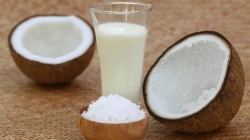
Coconut milk will help make desserts more delicious and fatty, so every time they cook desserts, many people will also look for instructions on how to make delicious coconut milk to eat with desserts. If you are looking for a way to make this ingredient, please see Vietseafarm's instructions on how to cook coconut milk to eat with desserts below.
.png)
Why do we need coconut milk when eating sweet soup?
Chè is a long-standing traditional dessert in Vietnamese cuisine, loved for its sweet taste, natural aroma and variety in combining ingredients. However, to make chè perfect in flavor and texture, coconut milk is an indispensable ingredient. This is not just a common topping but also a factor that helps highlight, balance and enhance the flavor of the chè.
Coconut milk creates richness and softens the sweetness
One of the important reasons why coconut milk always appears in most chè dishes is its ability to create a harmonious and natural fatty taste. Coconut milk is extracted from mature coconut meat, containing a high amount of vegetable oil, rich in healthy fatty acids and protein. When added to sweet soup, the fat in coconut milk blends with the sweetness of sugar or milk, helping the sweet soup not to be harsh, while softening the sugar taste, making the eater feel the sweet, light fat and cool aroma. Thanks to that, many sweet soups such as green bean sweet soup, floating rice balls sweet soup, corn sweet soup, banana sweet soup or Thung sweet soup are all added with coconut milk to create a "smooth" flavor.
Coconut milk helps the sweet soup have a characteristic attractive aroma
The aroma of coconut milk is the highlight that makes the sweet soup attractive. When gently boiled, coconut milk gives off a rich, natural and pleasant aroma, bringing a warm, close feeling, reminiscent of traditional sweet soups from the homeland. Whether it is hot or cold sweet soup, just a layer of smooth coconut milk drizzled on top is enough to make the dish more attractive, making diners want to enjoy it at first sight. Therefore, many people think that "eating chè without coconut milk is not complete".
Coconut milk creates thickness and increases the aesthetics of the chè
Not only does it bring flavor, coconut milk also helps the chè become smoother and more eye-catching. When cooked properly, coconut milk can be mixed with tapioca starch or rice flour to create a smooth, fatty and slightly thick cream layer. When poured on top of the chè, the ivory-white coconut milk stands out against the yellow, green or purple background of the ingredients, creating a beautiful visual effect. This not only makes the chè look more attractive but also makes the eating experience more interesting, enjoying both with the eyes and with the taste buds.
Coconut milk balances nutrition and increases the health value of the chè
In addition to its taste effects, coconut milk also has high nutritional value. Coconut milk contains nutrients such as unsaturated fats, vitamins C, E, and minerals such as magnesium, calcium and iron. These substances help support digestion, increase energy and improve cardiovascular health if used in reasonable amounts. When combined with starchy and protein-rich ingredients such as green beans, sticky rice, potatoes, lotus seeds, coconut milk helps replenish energy quickly, very suitable for snacks or desserts after main meals.
Coconut milk brings a sense of tradition and connection in Vietnamese cuisine
Vietnamese cuisine considers coconut milk a symbol of richness, abundance and sophistication. Most traditional desserts, especially southern desserts, are associated with the flavor of coconut milk. From red bean dessert, taro dessert, ba ba dessert to pomelo dessert, this sweet and fatty flavor becomes the "soul" of the dish, reminiscent of childhood memories, country markets or family meals. Therefore, adding coconut milk to desserts not only enhances flavor but also has cultural significance, demonstrating the sophistication and identity in the way Vietnamese people enjoy cuisine.
How to use coconut milk to make the dessert more delicious
To achieve a full flavor, the cook needs to know how to process coconut milk properly. Coconut milk should be simmered, seasoned with a little salt and sugar to bring out the rich flavor, and can be mixed with a little tapioca starch to create a smooth consistency. Pour coconut milk when the dessert has cooled or right before eating to keep the natural aroma and avoid oil separation. If using canned coconut milk, choose a reputable, pure product, not diluted or containing preservatives to ensure safety and quality.
.png)
How to cook coconut milk for dessert
Coconut milk is the "soul" of many Vietnamese desserts, bringing a rich, fragrant taste and making the dish more attractive. Cooking coconut milk at home is not difficult, just choose fresh ingredients and master the basic steps, you will have a smooth, rich and natural coconut milk compared to the canned kind. Below are detailed instructions on how to cook delicious coconut milk for dessert.
Ingredients to prepare
To have a rich, fragrant and smooth coconut milk, the ingredients need to be carefully selected, especially the grated coconut. You need to prepare:
Grated coconut: 1 old coconut (or about 400g of grated coconut). You should choose a medium-sized coconut, not too dry so that the milk is not harsh but still has a natural fat content.
Warm water: About 400–500ml to squeeze the milk.
Sugar: 2–3 tablespoons (depending on taste).
Salt: 1/4 teaspoon to enhance the richness.
Tapioca starch or cornstarch: 1–2 teaspoons to thicken.
Pandan leaves (optional): 2–3 leaves to enhance the natural aroma.
How to squeeze coconut milk
Prepare grated coconut: If you buy fresh coconut meat, you can grate it yourself with a grater or blender. If you use pre-grated coconut, choose the fresh, white type that has no strange smell.
Squeeze the first milk (thick milk): Put the grated coconut in a large bowl, add 200ml of warm water, squeeze it hard with your hands for 5–7 minutes, then squeeze it through a soft cloth or sieve. This is the thick milk, with the highest fat content and the most aromatic smell.
Squeeze the second milk (thick water): Put the squeezed coconut pulp in a bowl, add 300ml of warm water, continue squeezing and squeezing again. This water can be used to dilute if you want a lighter coconut milk, or cook it with sweet soup to create a light fatty taste.
Filter carefully: Use a fine sieve to completely remove the coconut pulp, helping the milk to be smooth and not lumpy when cooked.
How to cook coconut milk to eat sweet soup
Dissolve tapioca starch: Put 1-2 teaspoons of tapioca starch in a small bowl, add 3-4 tablespoons of cold water, stir well until completely dissolved.
Boil the milk: Put the thick milk into the pot, turn on the stove over low heat, stir constantly to avoid oil separation. Do not boil on high heat because the milk can easily clump or form a scum.
Add spices: When the milk starts to heat, add sugar, salt and pandan leaves and stir gently to make the milk more fragrant and flavorful.
Create thickness: Slowly add the dissolved tapioca starch mixture to the pot, pouring and stirring continuously until the coconut milk thickens, is smooth and shiny.
Turn off the heat and let cool: When the juice reaches the desired consistency, turn off the heat, remove the pot from the heat and let cool. Do not boil for too long because the juice will separate and lose its natural fat content.
.png)
Notes when cooking coconut milk for dessert
Coconut milk is one of the important ingredients that makes Vietnamese desserts more attractive, bringing a rich, fragrant taste and a characteristic smooth, glossy color. However, to cook delicious coconut milk that does not separate from the oil, does not clump and can be perfectly combined with other desserts, the cook needs to understand some important notes below.
Choose quality coconut ingredients
The first secret to having delicious coconut milk is to choose the right ingredients. You should choose a medium-aged coconut with thick, white flesh, when grated it has a natural aroma and a lot of oil. Coconut that is too young will make the milk light, low in fat, while coconut that is too old will make the milk too oily, easy to separate when cooked. If you buy pre-grated coconut, you should choose a reputable place, ensuring the coconut is fresh, not soaked in chemicals or bleached. In addition, you can also choose canned pure coconut milk from reputable brands if you want to save time but still ensure safety and flavor.
Water and coconut ratio when squeezing milk
When squeezing milk, the ratio of water and coconut meat greatly affects the fat and viscosity of the finished product. Normally, the ideal ratio is 1 part coconut meat with 1.2-1.5 parts warm water. Too much water will dilute the flavor, while too little will make it difficult to squeeze and reduce efficiency. The first squeeze should use less water to get thick milk, used for the top part of the dessert, and the second squeeze can add more water to get thin water to cook the dessert.
Do not boil coconut milk over high heat
One of the most common mistakes when cooking coconut milk is boiling it too high, causing the milk to separate, lose its viscosity and appear scum on the surface. When cooking, only use low or medium heat, stirring gently and regularly so that the milk heats slowly, without clumping. Maintaining a stable temperature helps the coconut milk retain its natural aroma and beautiful milky white color.
Mix tapioca starch properly to create a thick consistency
To make the coconut milk smooth, you should use tapioca starch or cornstarch, dissolved in cold water in a ratio of 1-2 teaspoons of powder for every 200ml of coconut milk. When pouring into the pot, stir gently to avoid clumping. Do not add too much powder, because the coconut milk will become thick, easily stick to the pot and lose its natural fatty taste. The ideal thickness is when the coconut milk can cover the spoon evenly, when lifted it has a slight pull.
Seasoning to balance the sweetness and fat
A delicious coconut milk is not only about the thickness but also about the balance between sweetness, fat and light salt. Many people often skip the salt, but just a little bit of fine salt will help the fatty taste of the coconut milk stand out more and reduce the feeling of fullness. The amount of sugar should also be adjusted depending on the type of tea: if the tea is already sweet, you only need to add a little sugar to the broth, but if the tea is light, you can add a little to create harmony.
Use pandan leaves to increase the natural aroma
To make the coconut milk more fragrant and attractive, you can add a few fresh pandan leaves when cooking. Pandan leaves not only give the broth a light aroma, but also create a natural light green color, making the tea more eye-catching. When the broth is almost boiling, you just need to add pandan leaves, boil for another 2-3 minutes and then scoop it out.
Do not cook coconut milk for too long
Many people think that the longer the broth is cooked, the thicker it will be, but in fact, cooking it for too long will cause the broth to separate and lose its characteristic flavor. Only cook until the broth is just boiling and thickened, then turn off the stove immediately. If you continue to cook, the coconut oil will separate, causing the coconut milk to burn and no longer be smooth and fatty.
Store properly to preserve the flavor
If you have leftovers, you can store the coconut milk in a glass jar or airtight container, let it cool completely, then put it in the refrigerator. The best storage time is 2-3 days. Before reusing, you should warm it gently over low heat, do not boil it again to avoid oil separation. In addition, do not freeze the milk because when thawed, it will separate and lose its original smooth texture.
Use the right coconut milk for the dessert
Each type of dessert is suitable for different levels of fat and viscosity of coconut milk. For desserts with soft and chewy ingredients such as sweet rice balls or taro dessert, you should use thick coconut milk to cover it. For corn desserts and green bean desserts, you can use thin coconut milk to cook with the dessert to create a more harmonious flavor. As for cold desserts such as mixed desserts or pomegranate jelly desserts, you should use cooled and lightly viscous coconut milk to easily combine with ice and toppings.
.png)
Where to buy quality and reputable coconut milk?
If you are looking for a reputable, high-quality coconut milk supplier that ensures natural flavor and is safe for your health, VietSeaFarm is the top choice trusted by many businesses, restaurants and consumers. This is a brand specializing in the production, processing and export of coconut products - especially pure coconut milk - with an internationally standardized process, bringing the characteristic fatty and fragrant flavor of Vietnamese coconut.
VietSeaFarm uses 100% fresh coconuts harvested from famous growing regions such as Ben Tre, Tra Vinh and Soc Trang, where the climate and soil are suitable for thick, fragrant and oily coconut meat. Each coconut is carefully selected, only taking the smooth, white coconut meat without impurities to squeeze out the coconut milk. Thanks to that, the product retains its natural fatty taste, beautiful milky white color and characteristic mild aroma, without strong oil or impurities.
The entire production process of VietSeaFarm's coconut milk is carried out in a closed environment, applying advanced cold pressing technology to preserve the flavor, nutrients and natural smoothness of the milk. The product does not contain preservatives, artificial colors or flavors, ensuring food safety standards HACCP, ISO 22000 and international export standards.
VietSeaFarm's coconut milk has a moderate viscosity, natural fatty flavor, suitable for preparing many dishes such as sweet soup, sticky rice, curry, cakes, ice cream, smoothies or desserts. When cooked, the milk does not separate from the oil, does not clump and easily blends with the ingredients, making the dish more flavorful and eye-catching. This is the perfect choice for both households and restaurants, eateries, and food production facilities that want to ensure consistent and stable quality.
Not only serving the domestic market, VietSeaFarm also exports coconut milk to many countries such as Japan, Korea, the US and European countries, meeting strict inspection standards on quality and food safety. This is a clear demonstration of the reputation and quality of Vietnamese brands in the international market.
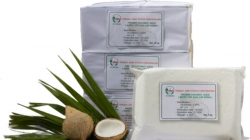
Understanding the diverse needs of customers, VietSeaFarm provides many types of convenient packaging such as paper boxes, zip bags, plastic cans and large barrels, suitable for both individual consumers and manufacturing enterprises. All packaging is designed to be airtight, anti-oxidized and preserve the flavor of coconut milk for a long time.
VietSeaFarm is committed to providing pure, safe and stable quality coconut milk products, along with a thoughtful customer support policy, flexible order quantity, fast delivery and competitive prices. Thanks to its reputation and consistency in quality, this brand is increasingly trusted by many domestic and foreign consumers.
If you are looking for a reputable and high-quality coconut milk supplier, VietSeaFarm is the most reliable choice today. With selected fresh coconut ingredients, modern production processes and international export standards, VietSeaFarm's products not only help dishes become more delicious and attractive but also ensure absolute safety for health. This is the ideal partner for every family, restaurant and food processing enterprise that wants to bring the quintessential Vietnamese coconut flavor to consumers everywhere.
Reference: https://vietseafarm.com.vn/how-to-cook-simple-sticky-rice-with-gac-and-coconut-milk-at-home
Views: 462
 Dec 11, 2025
- 0
 Dec 9, 2025
- 0
 Dec 9, 2025
- 0
 Dec 9, 2025
- 0
 Dec 8, 2025
- 0
 Dec 8, 2025
- 0
 Dec 2, 2025
- 0
 Dec 2, 2025
- 0
 Dec 2, 2025
- 0
 Dec 2, 2025
- 0
 Nov 23, 2025
- 0
 Nov 23, 2025
- 0
 Nov 23, 2025
- 0
 Nov 23, 2025
- 0
 Nov 18, 2025
- 0
.png)
.png)