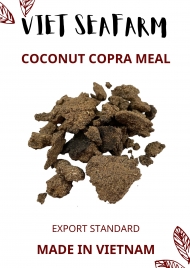
Is steamed cassava with coconut milk safe?
Steamed cassava with coconut milk (also known as steamed cassava with coconut milk) is a rustic, familiar dish in Vietnamese cuisine, especially popular in the South. This dish is made from peeled cassava (cassava), steamed, then drizzled with rich coconut milk, sometimes sprinkled with roasted sesame, crushed peanuts or shredded coconut to enhance the flavor. So is steamed cassava with coconut milk safe? Let's research and find out with vietseafarm
.png)
Is steamed cassava with coconut milk safe?
Steamed cassava with coconut milk is a traditional, rustic dish but is loved by many people because of its delicious, fatty, slightly sweet and easy-to-eat flavor. However, when it comes to the question "Is steamed cassava with coconut milk safe?", many people still wonder about the quality of the ingredients, the processing method and the level of food safety and hygiene. In fact, this dish can be completely safe if prepared properly, choosing ingredients of clear origin and following a clean processing procedure. Below are detailed factors to help you better understand the safety of steamed cassava with coconut milk.
Choose fresh, clean ingredients with clear origin
The safety of steamed cassava with coconut milk depends first on the quality of the ingredients.
Cassava: You should choose fresh cassava, large, even tubers, white or light yellow flesh, not crushed, no strange smell. In particular, you should pay attention to choose sweet cassava, do not use bitter cassava or cassava with a lot of resin, because bitter cassava contains hydrocyanic acid (HCN) - a natural poison that can cause poisoning if not handled carefully.
Coconut milk: You should use fresh grated coconut to squeeze out the milk instead of canned coconut, because fresh coconut gives a natural flavor, without preservatives or industrial flavors.
Other ingredients such as sugar, salt, roasted sesame, peanuts, shredded coconut... should also be selected clean, properly preserved, and free of mold to avoid affecting health.
Careful selection of ingredients not only makes the dish more delicious but also ensures food hygiene and safety and avoids the risk of poisoning.
Properly prepare cassava to remove toxins
Cassava contains cyanide, a natural poison that can cause nausea, headaches, and even poisoning if eaten in large quantities. Therefore, the preparation stage is extremely important:
Peel the skin and remove all the hard core in the middle of the tuber.
Soak the potatoes in diluted salt water for at least 4-6 hours, or overnight, to help remove any remaining cyanide toxins.
After soaking, rinse several times with clean water before steaming.
If you want to be more sure, you can boil the potatoes before steaming, which will help soften them faster and remove any remaining toxins.
With the correct processing procedure, steamed cassava will be absolutely safe, no longer toxic and retain its characteristic sweet and nutty flavor.
Clean and technical processing procedure
To ensure the quality of steamed cassava with coconut milk, in addition to the ingredients, the processing method is also a decisive factor.
Cooking utensils (steamer, pot, knife, cutting board) need to be washed and rinsed with boiling water before use to avoid bacteria or old grease from sticking.
When steaming, the heat should be medium, not too high so that the cassava cooks evenly, without being hard inside or burnt at the bottom.
Coconut milk should be cooked gently, not boiled for too long because it can easily separate the oil, lose its fatty taste and can quickly spoil if not stored properly.
After steaming, the dish should be consumed the same day, avoid leaving it overnight because cassava contains high starch, easily ferments and turns sour if not stored properly.
A clean and thorough processing process helps steamed cassava with coconut milk to ensure safety while preserving the natural fatty aroma.
Do not use industrial colors or flavors
Some street vendors or mass producers may add artificial colors or coconut flavors to make the dish look more appealing. However, this does not guarantee health safety if using colors or flavors of unknown origin.
Therefore, if you want to be assured, you should make it yourself at home or choose to buy from reputable brands with clear quality declarations and food hygiene and safety certificates. Steamed cassava with natural flavor does not need to be too bright in color, just a light coconut aroma and chewy, fatty cassava is enough to be attractive.
Reasonable storage and use time
Steamed cassava with coconut milk is a fresh dish, without preservatives, so it should be eaten immediately after cooking.
If there are any leftovers, you can store them in an airtight container in the refrigerator and use them within 1-2 days. When eating again, just steam or reheat them slightly. Absolutely do not leave them at room temperature for too long, especially in hot and humid weather because it can easily cause the dish to sour, ferment or become contaminated with bacteria.
.png)
How to make steamed cassava with coconut milk to ensure prestige?
To make steamed cassava with coconut milk that is both delicious and "guaranteed prestige" (food safety, no toxins, clean processing and suitable for sale), you need to pay attention from the stage of choosing ingredients, pre-processing to remove toxins, hygienic processing to preservation, packaging and quality control. Below are complete, practical and very specific instructions for you to do at home or standardize when producing commercially.
Choose ingredients: choose cassava and coconut with clear origin
Cassava:
Prioritize choosing fresh cassava, firm tubers, even size, smooth skin, no black spots, no sprouts, no strange smell.
If possible, choose the "sweet" cassava variety (sweet cassava) for instant consumption because it has less bitter sap; but no matter which type, it must be carefully processed.
Buy from a reputable source (garden, partner with label) to avoid potatoes being soaked in chemicals or stored for a long time.
Coconut for making milk:
Use fresh coconut, thick flesh, not moldy. If buying packaged milk, choose a pure product, with a label and food safety certificate.
Check the color and smell: fresh coconut has a light aroma, not sour.
Pre-processing cassava: remove cyanide (HCN) toxins — required
Cassava can contain cyanogenic glycosides — substances that produce HCN when digested. To ensure safety, it is mandatory to perform the following processing steps:
Peel thoroughly: Use a knife to completely remove the outer shell until you see the white flesh. The shell is where many toxins are concentrated.
Wash thoroughly: Wash the cassava after peeling to remove sand and impurities.
Soak in water: Cut into bite-sized pieces, soak in clean water for 4–12 hours (for light cassava) or 12–24 hours (for cassava with a slightly bitter taste). Change the water 2–3 times while soaking to remove the toxic sap.
Boil/pre-boil (recommended): After soaking, boil the cassava for 10–20 minutes until slightly soft, then remove and steam again — boiling helps remove additional cyanide and reduces steaming time. If steaming directly, ensure steaming long enough to cook thoroughly.
Safety check: If producing commercially, send samples for HCN testing to the lab to prove safety (standards must be at the safe level according to medical regulations).
Note: Never eat raw cassava or just peel and eat; always soak + cook thoroughly.
Process of making steamed cassava with coconut milk (reference recipe for family/small scale)
Ingredients: cassava (1 kg), 200–300 ml fresh coconut milk (sprinkling part), sugar/saltiness according to taste, a little salt, roasted sesame/crushed peanuts (topping).
Steps:
Peel, wash, cut into bite-sized pieces → soak for 6–12 hours (change water at least once).
Pre-boil: boil water, put potatoes in to boil for 10–15 minutes until the inside is not raw (use a toothpick). Remove and drain.
Steam: put the boiled potatoes in a steamer for 10–15 minutes to absorb evenly and cook completely soft.
Prepare the coconut milk to drizzle: mix 150–200 ml of coconut milk with 1/4 teaspoon of salt and 1–2 tablespoons of sugar (depending on taste), heat gently until warm — do not boil too hard to avoid oil separation. You can mix 1 tablespoon of tapioca starch with a little water to thicken slightly.
Spread the potatoes on a tray, drizzle with warm coconut milk, sprinkle with roasted sesame seeds or crushed peanuts. Serve immediately while still warm.
Hygiene, tools and food safety procedures
Personal hygiene: The processor must wash his hands thoroughly, wear food gloves if selling, tie his hair neatly.
Clean tools: Pots, steamers, knives and cutting boards, baskets, and towels must be washed and rinsed with hot water if possible. Separate knives and cutting boards for tubers/vegetables and meat to avoid cross-contamination.
Water used for processing must be clean: Use potable water (do not use contaminated water).
Processing area: If selling, separate the pre-processing area, cooking area and packaging area; regularly disinfect contact surfaces.
Keep a production log: Record the batch, date and time, source of raw materials, and responsible person — necessary if selling publicly.
Quality control (QC) — for both home and commercial use
Sensory inspection: Cooked potatoes must be soft, no longer bitter, no strange smell; coconut milk must be fragrant, not sour.
Toxic safety testing (commercial): Send samples for HCN residue testing (if using cassava in production scale) and save the results.
Microbiological testing (commercial): Test for total aerobic bacteria, E. coli, Salmonella if packaged for sale; especially when using fresh coconut milk (perishable).
Compliance with certification: If exporting or selling widely, aim for HACCP / ISO 22000 / VietGAP for raw materials, and VSATTP (Food Safety) certificate.
Packaging, storage and expiry date
Eat immediately: Best eaten immediately after steaming, while still warm is best.
Refrigerate: If there is any leftover, put it in a sealed container, store in the refrigerator for 1-2 days. Before eating, steam again to heat and drizzle with more coconut milk if needed.
Freezing: Can be frozen for up to 1 month (recommended for commercial quantities); defrost and steam again before use.
Fresh coconut milk: If using homemade coconut milk, use it on the same day; refrigerate for a maximum of 1-2 days. To extend shelf life, heat treatment (light boiling) or pasteurization is required for commercially packaged products.
Labeling: On products sold, clearly state the production date, expiration date, storage instructions, and ingredients to increase transparency and credibility.
If made for sale/export — add credibility standards
Traceable source of raw materials
Hygiene, tools and food safety procedures
Personal hygiene: The processor must wash his hands thoroughly, wear food gloves if selling, tie his hair neatly.
Clean tools: Pots, steamers, knives and cutting boards, baskets, and towels must be washed and rinsed with hot water if possible. Separate knives and cutting boards for tubers/vegetables and meat to avoid cross-contamination.
Water used for processing must be clean: Use potable water (do not use contaminated water).
Processing area: If selling, separate the pre-processing area, cooking area and packaging area; regularly disinfect contact surfaces.
Keep a production log: Record the batch, date and time, source of raw materials, and responsible person — necessary if selling publicly.
Quality control (QC) — for both home and commercial use
Sensory inspection: Cooked potatoes must be soft, no longer bitter, no strange smell; coconut milk must be fragrant, not sour.
Toxic safety testing (commercial): Send samples for HCN residue testing (if using cassava in production scale) and save the results.
Microbiological testing (commercial): Test for total aerobic bacteria, E. coli, Salmonella if packaged for sale; especially when using fresh coconut milk (perishable).
Compliance with certification: If exporting or selling widely, aim for HACCP / ISO 22000 / VietGAP for raw materials, and VSATTP (Food Safety) certificate.
Packaging, storage and expiry date
Eat immediately: Best eaten immediately after steaming, while still warm is best.
Refrigerate: If there is any leftover, put it in a sealed container, store in the refrigerator for 1-2 days. Before eating, steam again to heat and drizzle with more coconut milk if needed.
Freezing: Can be frozen for up to 1 month (recommended for commercial quantities); defrost and steam again before use.
Fresh coconut milk: If using self-squeezed coconut milk, use it on the same day; refrigerate for a maximum of 1-2 days. To extend the shelf life, heat treatment (light boiling) or pasteurization is required for commercially packaged products.
Labeling: On products sold, clearly state the production date, expiration date, storage instructions, and ingredients to increase transparency and credibility.
If made for sale/export — add reputable standards
Traceable source of raw materials: Clearly state the supplier, batch code, and harvest date.
Product certification: Aim for HACCP/ISO22000, HCN test certificate, food safety certificate, Halal (if needed for Muslim markets), and organic certificates if required by the market.
Safe packaging process: Use standard food packaging, vacuum or seal in a sealed box; when needed, use pasteurization/sterilization and cold packaging.
Periodic inspection: Plan periodic microbiological and physical-chemical testing of products to protect consumers and brand reputation.
Transparency with customers: Publicly disclose information on processing, preservation, instructions for use, and origin of ingredients on labels or menus.
.png)
Where can I find quality coconut milk ingredients?
When looking for quality coconut milk ingredients for food processing, production or export, VietSeafarm is one of the leading reputable addresses in Vietnam today. This is a unit specializing in providing pure coconut milk, produced from fresh coconuts selected from famous raw material regions, ensuring export standards and food hygiene and safety.
Why should you choose coconut milk ingredients from VietSeafarm
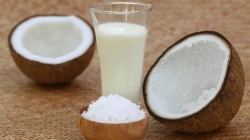
VietSeafarm is famous for its pure coconut milk products, without impurities, without preservatives. The company's coconut milk has a natural white color, a light aroma typical of coconut, and a fat content of 28-33% depending on production requirements. Thanks to the closed pressing, filtering and packaging process, the product retains the richness and fresh flavor of natural coconut.
Not only supplying the domestic market, VietSeafarm is also an exporter of coconut milk to many countries such as Japan, Korea, the US and European countries. This proves that their products meet strict standards of quality, safety and traceability.
Quality and reputable process
All coconut milk at VietSeafarm is produced according to modern technology:
Coconuts are carefully selected from mature coconut trees, high oil content, ensuring rich flavor.
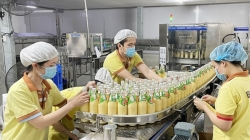
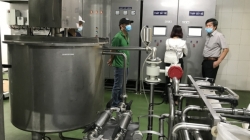
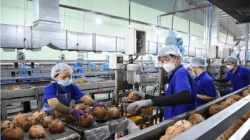
The process of squeezing the milk is carried out by a closed industrial machine, ensuring no impurities and bacteria are mixed.
The product is sterilized and packaged in specialized packaging, helping to preserve the natural flavor for a long time without the need for preservatives.
Each shipment is certified for VSATTP, HACCP, ISO 22000, helping customers feel secure about food safety.
With large production capacity, VietSeafarm can supply coconut milk in large, stable quantities, suitable for confectionery, curry, ice cream, tea production units or processed food export enterprises.
Reasons to import coconut milk raw materials from VietSeafarm
Importing coconut milk from VietSeafarm brings many practical benefits:
Clear origin, products originating from Vietnam - a famous coconut growing region with high quality.
International export standards, can be used immediately for food processing or exported to foreign markets.
Competitive prices, suitable for both small businesses and large factories.
Support consulting, quick supply, flexible response to customer needs.
With these advantages, VietSeafarm is not only a reliable domestic supplier but also a reputable export partner in the international market.
.png)
VietSeafarm coconut milk ingredients are the perfect choice for those who are looking for quality, safe and export-standard products. The combination of modern production processes, clean raw materials and a commitment to prestige helps VietSeafarm become a brand trusted by many businesses and consumers. If you are looking for a stable, nutritious and natural-flavored source for your products, VietSeafarm is the ideal partner for long-term cooperation.
Tham khảo: https://vietseafarm.com.vn/how-to-cook-sticky-rice-with-coconut-milk
Views: 927
 Dec 9, 2025
- 0
 Dec 9, 2025
- 0
 Dec 9, 2025
- 0
 Dec 8, 2025
- 0
 Dec 8, 2025
- 0
 Dec 2, 2025
- 0
 Dec 2, 2025
- 0
 Dec 2, 2025
- 0
 Dec 2, 2025
- 0
 Nov 23, 2025
- 0
 Nov 23, 2025
- 0
 Nov 23, 2025
- 0
 Nov 23, 2025
- 0
 Nov 18, 2025
- 0
 Nov 18, 2025
- 0
.png)
.png)