How many calories in coconut milk
Coconut milk, an indispensable ingredient in many Asian dishes, has a characteristic rich flavor. However, do you know how many calories a small amount of coconut milk has? Let's find out in detail with Vietseafarm how many calories in coconut milk?
.png)
How many calories in coconut milk?
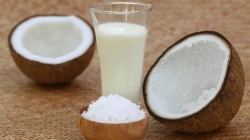
Coconut milk is a smooth, rich liquid pressed from mature coconut meat - an indispensable ingredient in many Vietnamese dishes such as curry, sticky rice, sweet soup, flan, ice cream or smoothies. Besides its delicious flavor, coconut milk also contains many nutrients that are beneficial to health if used properly and in moderation.
The calorie content of coconut milk depends on the concentration and preparation method, but on average:
100ml of pure coconut milk contains about 230–250 kcal.
1 tablespoon of coconut milk (about 15ml) provides about 35–40 kcal.
If coconut milk is diluted (used in cooking or drinks), the calories can be reduced to 100–150 kcal/100ml. Compared to other plant milks (such as soy milk or almond milk), coconut milk is significantly higher in calories and fat, so it should be used in moderation to avoid excess energy.
.png)
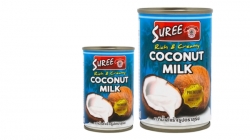
How many calories are in canned coconut milk?
Canned coconut milk is a popular choice today because of its convenience, ease of storage and quick use in dishes such as sweet soup, curry, sticky rice, cakes or smoothies. However, because it is industrially produced and may contain some additional stabilizers, flavorings or preservatives, the calorie content and nutritional composition of canned coconut milk are different from that of fresh, pure coconut milk.
On average, 100ml of canned coconut milk contains about 140 - 160 kcal, depending on the brand and dilution ratio of the product. Some premium types (thicker, fattier) can contain up to 180 kcal/100ml, while diluted or low-fat types only contain about 100 - 120 kcal/100ml. Compared to homemade coconut milk (about 230 - 250 kcal/100ml), canned coconut milk is often lower in calories because the fat content has been adjusted for easy storage and to suit the taste of consumers.
In terms of nutritional composition, 100ml of canned coconut milk usually contains:
Total fat: 12-16g, of which 10-12g is saturated fat (giving richness).
Carbohydrate: 2-4g, mainly natural sugars and soluble starch.
Protein: 1-2g, providing some energy for the body.
Minerals: Calcium, magnesium, iron and potassium are still retained at moderate levels, despite being industrially processed.
Safe additives (E415, E466, E412): are often added to stabilize the structure, prevent fat separation and extend the shelf life.
.png)
Compared to homemade coconut milk
Pros: Convenient, long shelf life, easy to use, time-saving, suitable for quick preparation.
Cons: Less fatty, not as rich and natural in flavor as fresh coconut milk; may contain stabilizers and acidity regulators.
How to use coconut milk without gaining weight
Coconut milk is a fragrant, fatty, and attractive ingredient in many dishes and drinks, but because it contains a high fat content, if used incorrectly, it can cause the body to take in excess energy and lead to weight gain. However, you can absolutely enjoy coconut milk while still maintaining your figure, just apply the correct way of use and combine it with a reasonable diet and exercise regimen.
Use coconut milk in moderation
Coconut milk contains an average of 200 - 230 kcal/100ml, equivalent to nearly a bowl of white rice. Therefore, if you are controlling your weight, you should only use 30 - 50ml at a time (about 2-3 tablespoons) to enhance the flavor of the dish, do not overuse it.
Prioritize pure coconut milk, low in sugar
When choosing coconut milk, you should prioritize pure or unsweetened coconut milk. Canned products with added sugar, added fat or artificial flavors can increase energy quickly, causing excess fat accumulation. If possible, choose fresh pressed coconut milk or VietSeaFarm's natural coconut milk, which retains a light fatty flavor but is not too rich, suitable for people on a diet or losing weight.
Combine coconut milk with healthy dishes
Instead of just using it in sweet dishes with a lot of sugar such as sweet soup or cakes, you can combine coconut milk in:
Green smoothies (spinach, banana, pineapple, thin coconut milk) help add fiber and reduce cravings.
Chicken or fish curry cooked in coconut milk, use a small amount and eat with boiled vegetables.
Sticky rice, cakes with little coconut milk, but only use a small portion, avoid eating at night.
Drink plenty of water and exercise
Even if you use a small amount, coconut milk still contains saturated fat, so to avoid energy accumulation, you should drink plenty of water (2–2.5 liters/day) and exercise regularly for at least 30 minutes a day. This helps the body burn excess energy, effectively supporting weight maintenance.
Do not use coconut milk instead of milk or main meals
A common mistake is to use coconut milk instead of milk because you think it is rich in nutrients. In fact, coconut milk contains a lot of fat but little protein and calcium, so it is not enough to replace the main source of nutrition. You should only use it as a supplementary ingredient, not drink it directly in large quantities.
Coconut milk is a natural source of nutrition rich in energy and healthy fats, if used properly, it will bring many health benefits. However, it is necessary to balance the portion to avoid excess calories and ensure the body absorbs it best. If you have any questions about how many calories are in coconut milk, please contact Vietseafarm for specific advice.
Views: 601
 Dec 11, 2025
- 0
 Dec 9, 2025
- 0
 Dec 9, 2025
- 0
 Dec 9, 2025
- 0
 Dec 8, 2025
- 0
 Dec 8, 2025
- 0
 Dec 2, 2025
- 0
 Dec 2, 2025
- 0
 Dec 2, 2025
- 0
 Dec 2, 2025
- 0
 Nov 23, 2025
- 0
 Nov 23, 2025
- 0
 Nov 23, 2025
- 0
 Nov 23, 2025
- 0
 Nov 18, 2025
- 0
.png)
.png)